Eggs in Winter


Sometimes, it’s just hard to keep up.

This Christmas season, there has been so much good.  As I stare at the beautiful plate of sugary goodness: peppermint bark,  frosted cookies, candies sprinkled with red and green sugars, delivered by a longtime friend, I worry that in my own struggles to keep up with my daily tasks at hand, I may not truly take in all the sparkle that is around me.   I am afraid that I might have trouble keeping up with the kindness.  I fear that I will forget to count some of my blessings.

All of the little girls could jump rope.  All of them, except me.  Perhaps I would have been able, but I was afraid to try.  Dressed in  my Catholic school uniform of a red, white, and blue plaid jumper and crisp white Peter Pan collar shirt, I was content to hold the rope’s end, swinging it in rhythm as the other girls, whose outfits matched mine, lined up to jump Double Dutch in turn.    I was content to spend my twenty minutes of recess admiring the fancy footwork and shiny Mary Janes of my classmates.  I desperately wanted to be part of their game.

“Patty, don’t you want a turn?” From time to time, another girl might invite me to try.  Though I may have secretly wished to jump, I never let go of my rope’s end.  I think I was afraid of what might happen if I did.

I am pulled somewhere from both sides, into a lonely space where I can find nobody else, nobody like me, and into all of the others, so I, too, can be one of them.  Each place may seem right at one time or another, but I wonder if either is where I am supposed to be.

His eyes are deep, dark chocolate.  Looking into them, I know he sees through me as easily as it is a struggle for me to see inside of him.  These eyes, decorated in eyelashes an inch long, can’t share the secrets.  He can’t tell anyone.  Not yet, anyway, for it’s not time.

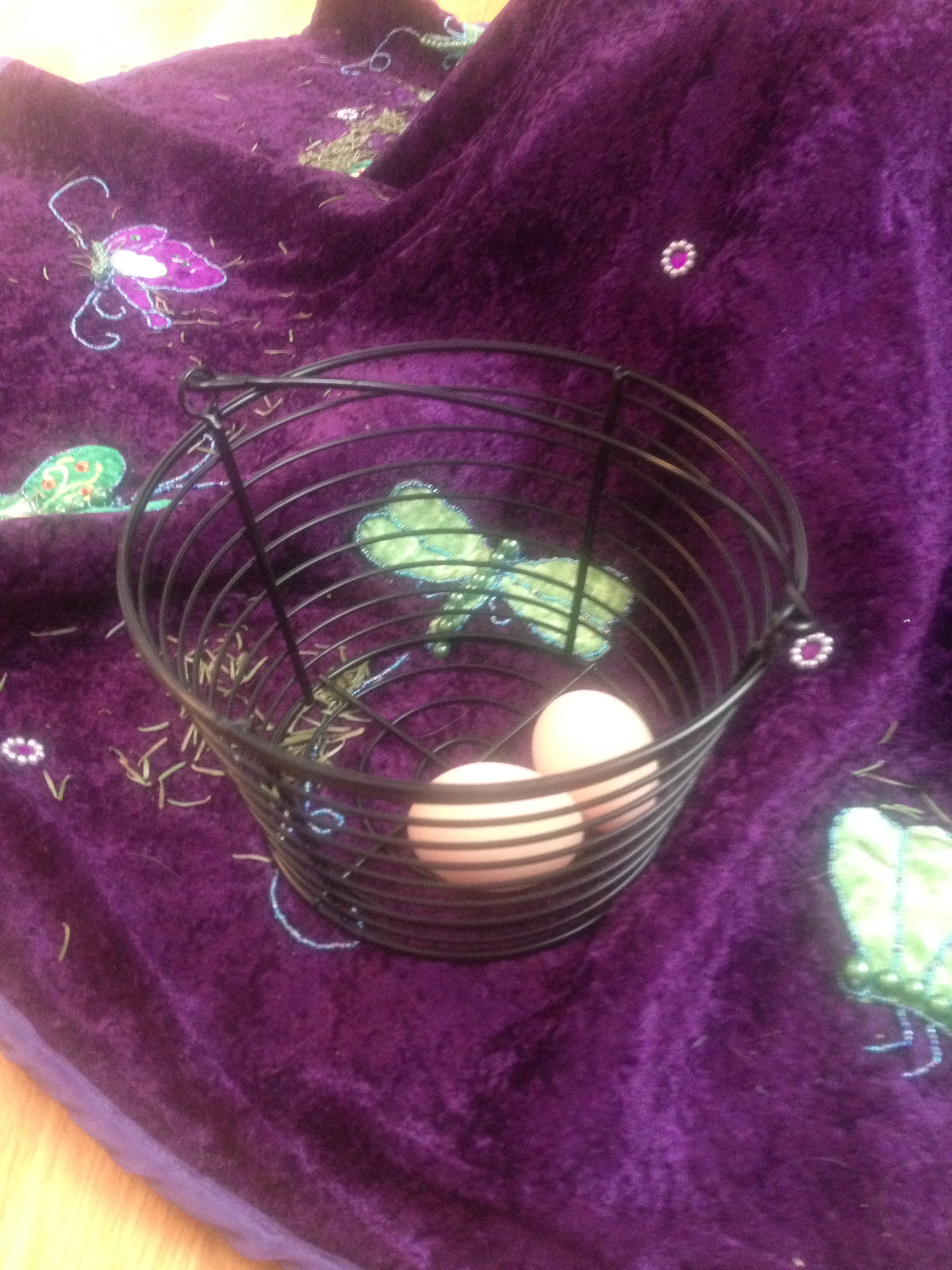
How valuable those tiny moments are; the moments when you see a difference, and you know that there has been a shift.  Perhaps not astounding,  but the slightest step on the path.   How amazing to brave winter’s icy blast to find one perfect brown egg, still a little warm, in the nest box.  My hens have been prolific egg layers through the summer and fall.  We had dozens of fresh, strong-shelled farm-to-table eggs every week.  As the hens began to lose feathers while molting, and as the season’s chill had settled in, I should have remembered from what I had read that during the wintertime, egg production will likely drop off.  I was still surprised when it happened.  My chickens, it seems, are having trouble keeping up.  I had to buy a dozen eggs for the first time in many months.

I may not have appeared lonely, but I must have been.  Now, there is loneliness in the fear, the fear of not being able to keep up with my son.
If we spend the whole night waiting for the morning, we wait all day for our chance to lie down and rest.  The chickens need sunlight to lay eggs, just as I need his bright spirit to tell me that this is not the end, but to carry on through the nearly barren winter, gathering an egg or two for a day if I am lucky.  Gather  the lonely harvest in anticipation of spring’s bounty, because that promise of hope, of a peaceful afternoon, of a basket brimming with fresh eggs, is all we have.  I will be sure to hold tightly to my end of the rope.

I don’t expect to gather half a dozen eggs anymore.  Maybe, though, if I go out one last time to check the nest boxes at dusk, when the sky shines pink and gold,  there will be just one more egg waiting for me as a reminder to count my every blessing.
Turtles, Chickens, and the Stuff In Between


I didn’t look back; I couldn’t, for fear of what I would see.  The sound was hollow, soul-shaking, and unforgettable.  It must have broken into a thousand pieces.

The lagoon has always been one of my favorite spots.  I have been to breathtaking European gardens and tropical sandy beaches, but DeKalb’s East Lagoon is where I would choose to spend my days.  It was probably near dusk, and the weather was still and warm.  I don’t remember where we were headed or where we had been, but we were driving alongside the lagoon when we came upon the turtle.

In true tortoise-and-hare fashion, this turtle was indeed keeping a steady pace of not much more than zero miles per hour.  Dan slowed the van and then came to a stop while we waited, waited, and waited some more until our path was clear.  

After what seemed like much more time than even a tortoise should take to cross the finish line, we were finally on our way, safely out of the animal’s path.   Within seconds, though, a car came from the other direction, and that was the end of the turtle.

We can work so hard, with such patience and devotion, hard enough to think that we have nearly made it to the other side.  Then something happens: a trigger of some sort, a reminder of something that used to be, unkind words, or a forgotten birthday.  A thousand pieces, or even more, that need to be put together again.  Sometimes, I’m just weary.

The snow had not yet begun to fall, but the early morning’s mist hinted that the storm was near.  Something came fast from the field to the south; it was darkish gray, maybe, and it rolled under my car so quickly that I could not avoid the impact.  I hoped it was a tin can or maybe a rock, but I feared it may have been a squirrel, a rat, or a field mouse.  I looked back and saw nothing, so I continued home.

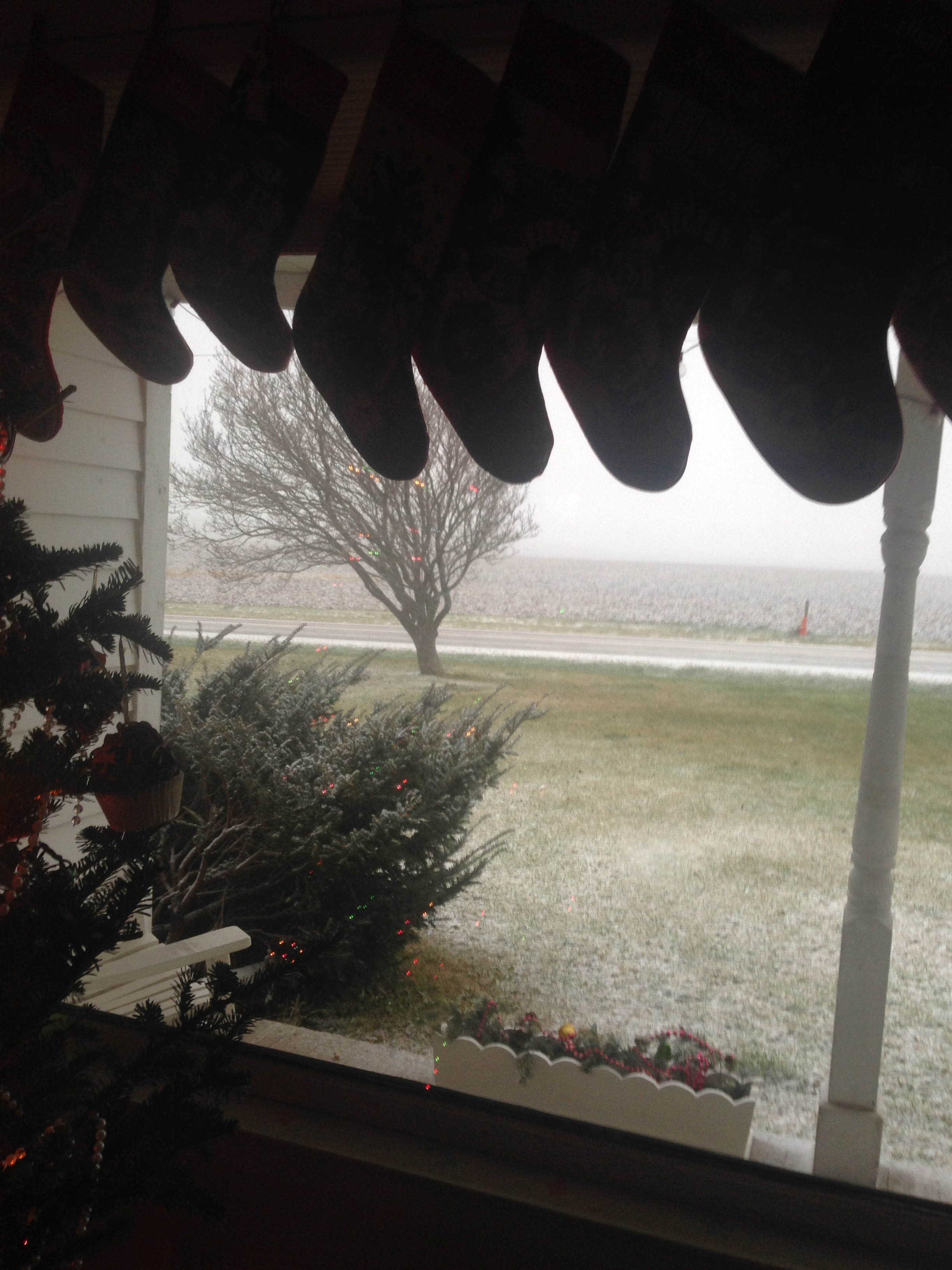
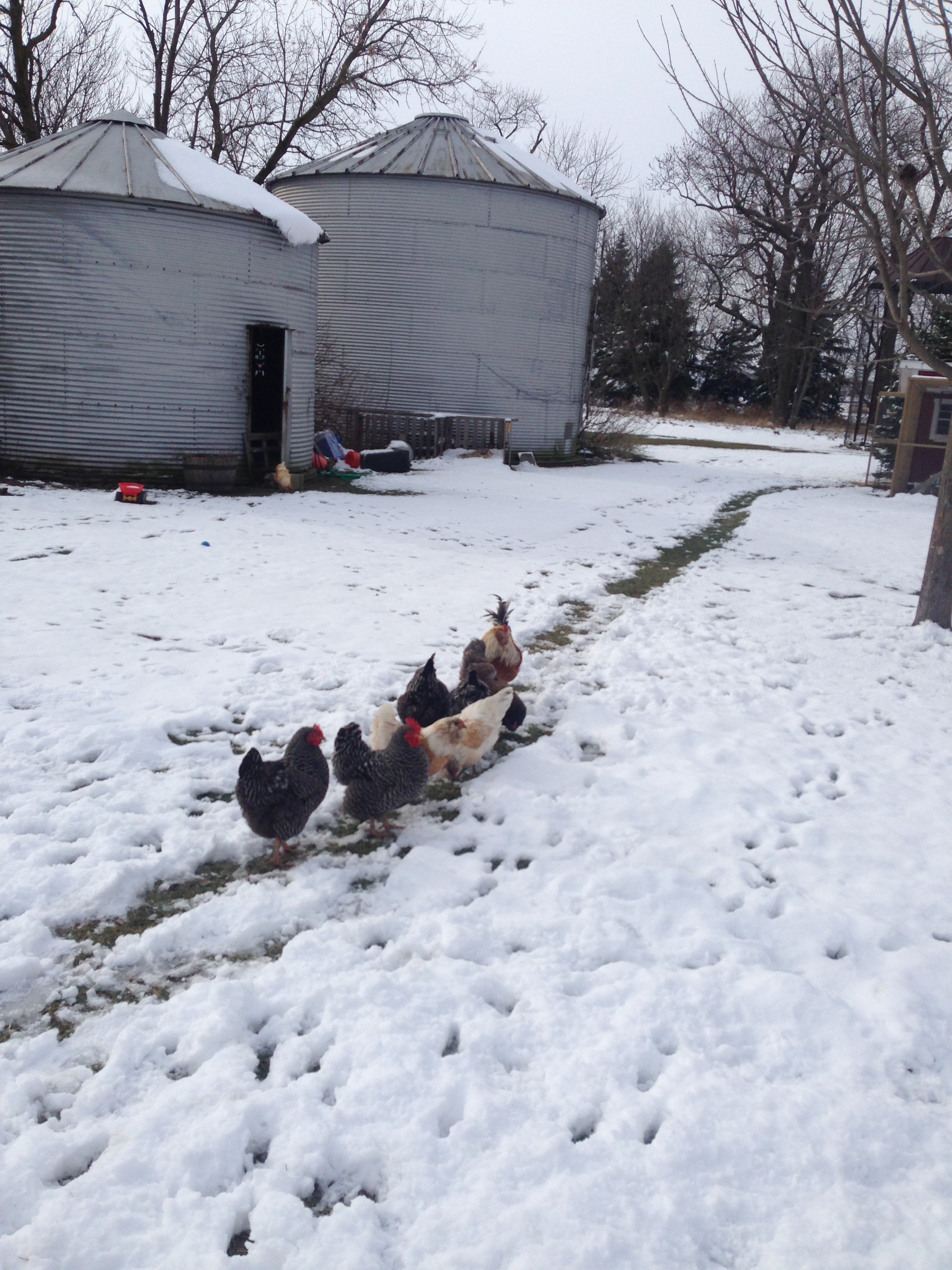
The chickens seemed confused by the snow.  Our first snowfall this season happened to accumulate to nine inches, and it took a couple days and some melting before they ventured more than a few feet past the coop.  They were a bit braver with each passing day, and by now little chicken footprints could be seen all around the farm.

The snow began falling with a fury in the afternoon.  By dusk, I knew that the flock would be in the coop for the night.  Aaron, my best chicken helper, was a few steps ahead of me as he bounded through the blanket of snow.

“Six chickens!”  He called back to me with an air of urgency.  The chickens, led by Wendell, our rooster and their guardian, always convene as a flock before roosting for the night.  Now, nearly half the hens were missing, and Wendell was on high alert, clearly wondering, as we were, what had happened.

It’s a message from the school, a call from a concerned parent, an observation, or something I may have overheard that shatters the fragile shell that had taken so much to build.  Here we are, once again, in the place that we wish away.  Maybe it will never really go away.  Maybe it can’t.

I understood going into chicken keeping that chickens are not forever.  There could be sickness, extreme weather, an accident, a preying hawk, or another predator that could take one of my hens.  Even Wendell, I know, is not invincible.  But four?  To lose four chickens at once, during the daytime, was unfathomable.

My tears flowed cold, and the wintry wind burned my cheeks. “We could order more chickens,” offered my sidekick.  We could, but I wanted these chickens, my chickens.

I thought of how carefully we had planned for the chickens, who came to us as tiny two-day-old babies, who we had nurtured and tended with the best that we had.  We brought them ice water and frozen fruit to help them keep cool during the summer’s heat.  We gathered each egg with great pride and wonder.  We put fresh handfuls of shredded pine bark onto the coop floor and tossed lavender and oregano into the nest boxes.  We held our chickens, and we loved them.

I often wonder if love is enough.

When I passed back along the path near where I had been earlier that morning, I noticed the remains of what was probably a squirrel at the edge of the road.  I wondered if this had been the gray flash that I had encountered some ten hours before.

Dan came out with the flashlight, and he and Aaron had not been gone more than a few minutes before I heard the cheer.  The four chickens were cold and afraid, but they were safe.

Sometimes we make it out.  Sometimes, there’s just not enough of something.  And then there’s a whole lot of stuff in between.

There was an extra sweetness about those hens as we carried them, one by one, to the warmth of the coop.  The ten were reunited as a flock, and, in this moment, relief blanketed all God’s creatures.  The hens had been spared.  Their time had not yet come, not yet.

I love going to the lagoon.  My memory of the demise of the turtle is not enough to keep me away from a place so magical and dear.  My brush with the lost chickens makes me love them that much more.  When we stumble and fall as all humans do, as we struggle to our feet we see that the door is left open for another chance, perhaps another trial here on earth.

And for the doors, open, closed, and unexpected, we are grateful.

Going Home


It could have been a driving snowstorm, or maybe the thickest, most dense fog that I had experienced; I don’t remember the precise conditions, but the fear will never leave my memory.  I’m a nervous driver anyway, but this night, travel would have been unsafe even for the seasoned race car driver.  I should have stayed at my friend’s apartment, but I was eager to make it home after my night class.  I was so afraid, once in the thick of it, gripping the wheel as tightly as I could, that I might not make it home.

My own words played incessantly in my head: so many years, so many services and specialists, twenty medications, and no answers.  I wonder how we have landed here, in a place of self doubt, where we feel lower than the last few nuts that the squirrels have abandoned along the exposed tree roots on the frosty ground as the inevitability of the cruel cold looms just ahead.

This time, it was driving rain and, more than that, the emotions screaming from inside my head, that obstructed my vision and made me wish I could just turn around, or that I could just keep driving and everything would come clear.

“I’m not sure psychiatric hospitalization is the answer.”

This was the doctor that eight days before had sent us home on a safety plan because no hospital within three hours had a place for our little boy.

What, exactly, then, is the answer?

I am pretty sure he didn’t know.  I am pretty sure nobody does.  No, hospitalization is not the answer, but it is an all too necessary step along the arduous journey.

It was, on this day, to be the course, though certainly not the answer. He must have known, because the fight left him for a good while, and he walked to the ambulance from the school.

It dawned on me that I should put the finch feeder away for the season.  No finches would be coming, at least not until springtime, when the torrent will have subsided and the birdsong will play vividly through the open window.

The baby crib, for decades a fixture in our home in one form or another, has also been taken down and stored away, for its season is now behind us.

What if we are destined, as beings that walk this earth, to be good at one thing?  What happens, then, when that one thing is done?  What happens to us?  Does our purpose fade?  Can we take what we have been, what we have learned, and offer a new kind of energy to our spent course?

There was a bed this time, at a hospital  not far away and on a unit for children with autism.  He would be transferred soon.

It was all too much for this boy, or he was too much for them.  It was as if the driving rain continued within the walls of this emergency room.  There were four people, all wearing scrubs of the same blue, jumbled together as one mass.  I couldn’t see their heads, or perhaps I did not look at them.  In a flash, through the screams of angst, one of the headless figures pumped the shot into my son’s soft pink flesh.

They left the room with the same fury as when they had entered.  Nobody noticed my tears; maybe nobody noticed that there were any emotions at all.

I tried hard to listen to his stories; his speech was rapid and his tone was convincing.  He spoke of Lego figurines and of how the mother of his classmate was going to take six months leave from her jobs, which included helping people that had wheezing, working as both a doctor and a computer programmer, and managing a company that fixes basements.

My own thoughts, though, interrupted his spoken stream of consciousness and distracted me from honoring him with my full attention.  I couldn’t really hear what he was saying.  I wondered what any of this was even about.

Who will help him in the bathroom?  Will he like what he is offered to eat?  Will someone sit in his chair at the kitchen table while he is gone, or will it serve as a lonely reminder of the demons that continue to invade his childhood?

“I’ll be in the hospital for two weeks…,” he piped matter-of-factly,  as though he was accepting of his fate.  “We can build our castle then, when I get home.”

Yes, we can.  And it will be much better than any video game.

I remembered the donut store from another time.  It had closed at midnight, less than fifteen minutes before the end of this ten hour ordeal, when I had found my way to the storefront with hopes of bringing breakfast for those at home.  The  door was locked, but the lights were on.   There, proclaimed in red and blue neon letters, was a tiny saving grace after a day of sadness and humiliation: “DRIVE-THRU.”

So, there would be donuts after all.  Ethan doesn’t really like donuts anyway, which is good, because he wasn’t going to be home to eat one.

We have seen him a few times now, and he has let us know, through his  no-nonsense descriptions of the rhythm of his days at this new hospital, that he is doing okay.  Today, as we make our way through the season’s first snow on the way to visit, we will be hopeful: hopeful that the new medication may be the one that helps, hopeful that he will be home soon, and hopeful that there will be new paths on the horizon.

No, it’s not the answer, but it helps, if even just a little bit, to guide us home through the storm.

Blessings for a safe and joyous holiday season, at home or wherever your journey leads.

When the Doors are Closed


The chickens were locked out of their coop, and darkness had done its best to set in.  It was a warm night, and I could almost hear the stillness in the stolen radiance of this late autumn evening.  There was a rustle, and then a sort of panicked chicken sound, followed by more of the same.  They didn’t know what to do.

I don’t know what to do.  Anything can trigger a rush of emotion.  Something did not go his way.  His best driver was not going to win the race.  We were not going to the grocery store.  He didn’t like the girls’ music.

He looked up at me, his rich brown eyes more beautiful than before as they penetrated deep inside my soul.

“You are going to have to bring me clothes, at the hospital.” He knew.

I had been in this room with one of the girls before.  Just briefly, though, because she did not want me with her.  Ethan looks small as he sits on the hospital gurney, clutching his Thomas blanket and eating gummy bears, the only sustenance, of you could even call it that, that I had in my bag.

There was nothing to do but look at the reflections from the various hospital equipment on what must have been a very cold tile floor.  There was no way to know what time it was.  It could have been any hour or no time at all.  At one point, I heard lines from a lullaby piped through the tinny speaker in the hallway.  Surely, somewhere, people were smiling, even celebrating, as they welcomed the new life.  This child, my child, of barely nine had once held the promise of what was to come.  He was two days old when I first met him as a robust newborn, before we knew how fast the world could spin.

“Please let me go home with you,” he begged.  “Give me one more chance, please.”

How could I ever know, how could anyone know what to do?

I was so hungry that I thought I might fall over. Two trays arrived…a “safe” tray for him and a “guest” tray for me.  Both trays, exactly the same, had plastic silverware and a bendy straw, the kind that made me cheer as a little girl.  The pizza was perfect…a little crunch to the crust…topped with mushrooms and green peppers, but not too many.  My heart pounded with every bite, though, and it was hard to swallow in a room so thick with emotion.

“Please,” he pleaded as he pounded his feet into the wall.

“Do you want us to give him something?” offered the hospital staff, more than once.

What could they give us to make this all go away, to turn the sun so my child can play shortstop on a team with other nine-year-olds, so my child can board a plane to visit his brother, so we can hold hope that this boy will live a life filled with joy, with love, and with productivity?

Do I want you to give him something?  Yes, yes, I do.  He deserves a chance at medical cannabis.  He has done his time; he has had trials of twenty medications which have interrupted his childhood for no positive  effect.  It’s time to move the earth for this boy.

My chickens!  It must be getting dark by now.  They might be afraid.  Maybe we all are a little afraid.

Can you rub my back?  I thought he was asleep.  His breath had taken on a rhythm, but his eyes were wide open and held a distant gaze. There was not much he could be looking at in this room, but there was, for certain, so much to see.

Time wore on.  There were no available beds anywhere; there was no room at the inn.

In this moment, he got his wish, and I will continue to hope for mine.   We couldn’t hold ourselves up any longer, and so we had to come.  Half a Sunday later, off we went, together, out the sliding glass doors and into the darkness, at least for a little while longer.

We will keep walking, hoping, singing, painting, digging in the dirt, begging, searching, and, of course, wishing, because he is worth it.

If It’s Over


When the lists are longer than the number of days, and more chores roll out as they present themselves, there is a good chance that it’s not all going to get done.  I sank my shovel into the edge of my fourteen by twenty-two foot garden plot and stood quietly to watch the combines, mechanical and rhythmic, in the  vast cornfield a stone’s throw from our property.  As the farmer stretched his arms to the cab of his tractor, his midday yawn was nearly audible from across the road.  I wondered if he loves the time he spends in the field, if he looks forward to this fall season and the long hours of chasing the Northern Illinois sunsets.  By nightfall, acres upon acres had been harvested.

The chickens have been helpful.  They are doing their part to prepare my modest plot for winter.  There has been so much to learn this first year at the farm.   By the time the first lettuce seeds were in the ground, fescue had overtaken the garden’s border.  I would work on weeding that soon, I often thought.  Today, several frosts into fall, I have finally dug out, at least for now, the last of that invasive grass.

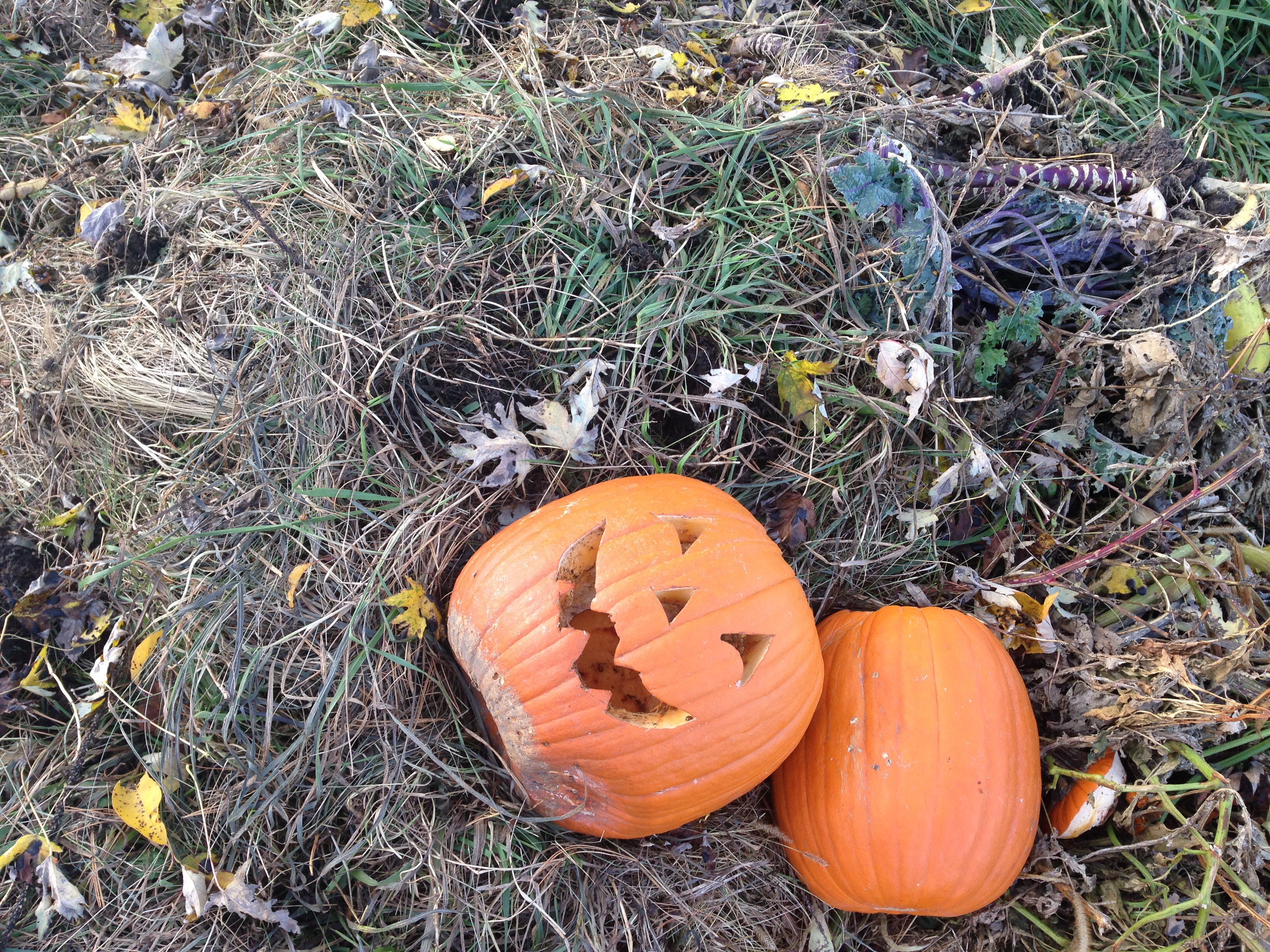
Our pumpkin patch was surprisingly (at least to me) fruitful, and by early July, the neighboring watermelon vines had been nearly overtaken by the vigorous Jack Frost crop.  When a man from Wasco nursery came to plant the apple trees that were a birthday gift from my brother and sister, he showed me how to loosen the vines from the ground at the point of the stems.  The pumpkins ripened in their sunny splendor, and as the cool air crept in, we carved our glorious crop into Halloween Jack-o-Lanterns.  

I could have stayed in the shower forever; I dreaded having to stuff myself into my jeans for the first time this early fall.  I shouldn’t have eaten all that Halloween candy…or those donuts…or an extra piece of cake for each November birthday.  When  I turn around and look back at the days, though, there are no real regrets.  If it all ends today, the storms will not scare me, and I will face my Maker with my eyes open.

I can reflect on where I have been, which is almost everywhere but nearly nowhere at the same time, in the same heartbeat.  The aftermath of the rotting Jack-o-Lantern smiled up at me from where it had been discarded at the top of the compost pile.  In a flash of indefinable emotion, perhaps part guilt, part sadness, and part feelings of what could have been, I thought about how the once robust pumpkin that I had grown from a tiny seed had neared the end of its purpose here.  At least, that is, for this season.  My pumpkin, though, will be here at the farm, nourishing future fairy roses, sage, blueberry bushes, and more pumpkins, for the rest of our days.

We have nearly decided against renewing our license to foster.  We have been at the state’s definition of capacity for a while now, and it would be many years before we will have an opening for another child.  Even then, would we still have the strength and energy to begin again?  

Lois was a curiosity to me, as a twenty-four-year old young mom just learning to embrace gardening.  She lived alone, two houses down from us.  My best guess would have put her in her early seventies.  There were no flowers or berry bushes in her yard; no tomatoes, rosemary, or garlic plantings were anywhere to be seen.  Lois, though, gardened every day, sunrise to sunset.  She sat in the grass with a five gallon bucket and a weeding tool, painstaking picking what only she could identify as weeds in her lush, green lawn.  

I didn’t understand Lois at the time.  Didn’t she like flowers? Now, though, I think I do understand.  She had a purpose, in each given moment.  And, isn’t that what we all, deep inside our souls, need?  Our job is not to assign value or to define purpose for that of another, but rather to embrace our own.

I watched my little son as he carefully navigated his way down the farmhouse stairs, bringing one foot to meet the other as he slowly moved to the next step.  Developmental checklists from my days of evaluating babies flashed through my mind: alternates feet up and down stairs?  Emerging.  He is on his way.  He moves with purpose.  I, though, have begun to slow down.  It is easier on my hips now if I don’t alternate feet on the steps anymore.  As the simplicity in my day is what I yearn for, I wonder if I will become like a young child again, where wonder is at the forefront and where I am just content to sit in the grass, without even being concerned with picking weeds.  Sometimes I wish we could just skip all the stuff in between.  

The season has crept up on me.  I know I will find plenty do do during the barren days of winter.  But what about the greater purpose?  When the seeds are planted, when the plants take root, grow, and produce, where does this leave me?  Every time one of the children leaves the farm, for a season or for longer, I find solace in knowing, in hoping, that as they work to uncover their own purpose, they will, one day, come home.  

Each given day is a moment and a lifetime.  I don’t know what’s around the corner.  I don’t think I have to know, and I am pretty sure I like it that way.  Because right here, what is right in front of me is enough.

There’s a Chicken in My Car: October Baseball and Other Rarities

She wanted to know what she should bake; she was taking suggestions via Facebook.  My friend Chrissy is a self-proclaimed therapeutic baker.  She’s also a foster mom.  She goes to court, she comes home, and she bakes.  And lucky are we that live close enough to be her neighbors.

Foremost in my mind as the first hints of chill return to the air are Cranberry Bliss bars, which are a couple-times- a-season delicacy from the Starbucks drive-thru.  She asked.  I have never eaten a cranberry bliss bar while watching baseball.  By the time those types of treats are in season, we are heralding the fall season and preparing to deck the halls. This year, though there is a rustle of leaves on the ground and my little boys have already been wearing their new Halloween costumes, I am still listening to balls and strikes being called over the radio.  That’s not what usually happens, but I cannot be more grateful.
“I can bring you some of these right now.”

Right now.  That’s not what usually happens.  But I am so grateful.

I have an angel friend who has, on a whim, brought me an entire freezer full of meat that she “happened upon.”  She once handed me a tiny screwdriver, part of an eyeglass repair kit, when my daughter’s glasses kept coming loose.  Another time, she came to my house with a latte and a six-pack of Cranberry Bliss bars which, she claimed, were on special.

I had become so enamored with my hummingbirds that I hadn’t even thought that they might not be here to stay.  It had been a while since I had gotten a glimpse of my magical friend flitting near the ruby red feeder which hangs outside the kitchen window.  Then came my hard realization: the hummingbird is not coming back anymore, at least not this year.

That’s it.  There’s a season for all of this: baseball, hummingbirds, and even Cranberry Bliss bars, unless you are Chrissy, and you can bake them whenever you like.

“When is it time for me to play real baseball?  I think that’s what I am going to be.  I was thinking of being a boxer, but I decided I wanted to be something happy, so I am going to do baseball.”  He knows.  I loved this flow of spoken thoughts from my little boy.  He knows: baseball is happy.   When it’s not time for baseball, though, we need other things to keep us going.

When we learn things we wish we didn’t know, we are, in a way, forever changed.  We can’t go back to where we were before, because there is nothing there.  What lies before us may be unfamiliar, but it is where we are.

No matter who wins the World Series, I plan to enjoy the ride along the way.

Chrissy brought me three boxes of glorious cranberry bliss bars and pumpkin scones that day, and I sent her home with a dozen chicken eggs.  I know I got the better end of that arrangement.  Perhaps she was baking as therapy, to make herself feel better, but she certainly brought some light to my day.

She had left less than two minutes before, and my mouth was already stuffed with cream cheese, white chocolate, and cranberries when her text came in.

“There is a chicken in my car.”

I doubt there’s a season for having chickens in your car.

My friend Juli stopped by this morning.  She was coming to collect her baby carrier that I had borrowed.  “Would you like some applesauce and pie filling?”  Would I like some applesauce and pie filling?  How is that even a question?

Though her chore list was probably longer than the distance between our homes, she took the time to deliver a box containing home canned pints of applesauce and quarts of pie filling.  When apples are out of season, we will be happy, and we will be reminded of our sweet friend.

As I watched Juli drive away, I wondered if there might be a chicken in her car.  I half-hoped there was, because that would mean that she would come back.

I just might put my feet up, sneak the best baked goods into the living room, eat applesauce from the jar, and watch the Cubs continue to work their way to the World Series.  All the while, I am going to remind myself that even when things are beyond understanding, blessings abound.

Words 


I was so distracted by what she had said that the rest of her words swirled together and floated in an elusive ring through the air, mingling with the incense before fading to a place where there are no words, only the deep sense that something indiscernible has happened.  

What she said must have been true, or I might have remained a captive audience.  As my attention turned elsewhere, my thoughts rotated with the fervor of a metal merry-go-round, the splendor of its carnival colored paint chipping into oblivion with each passing circle as words trailed into the distance.

I think this is how my children must feel.  Bags and boxes placed at the will of another on a mechanical conveyor belt, moving along at someone else’s speed, headed for someone else’s plan, and perhaps a bad one at that.

I could only hear part of what you were saying.  

It’s not my turn to talk.  It usually isn’t.  But when it is, and I do, the words begin to fall out to the story, and then there is before me a restlessness followed by first soft and then unbridled voices.  No one is looking at me anymore, and I can no longer even hear my own voice.

But you said…

No, that’s not what I said.

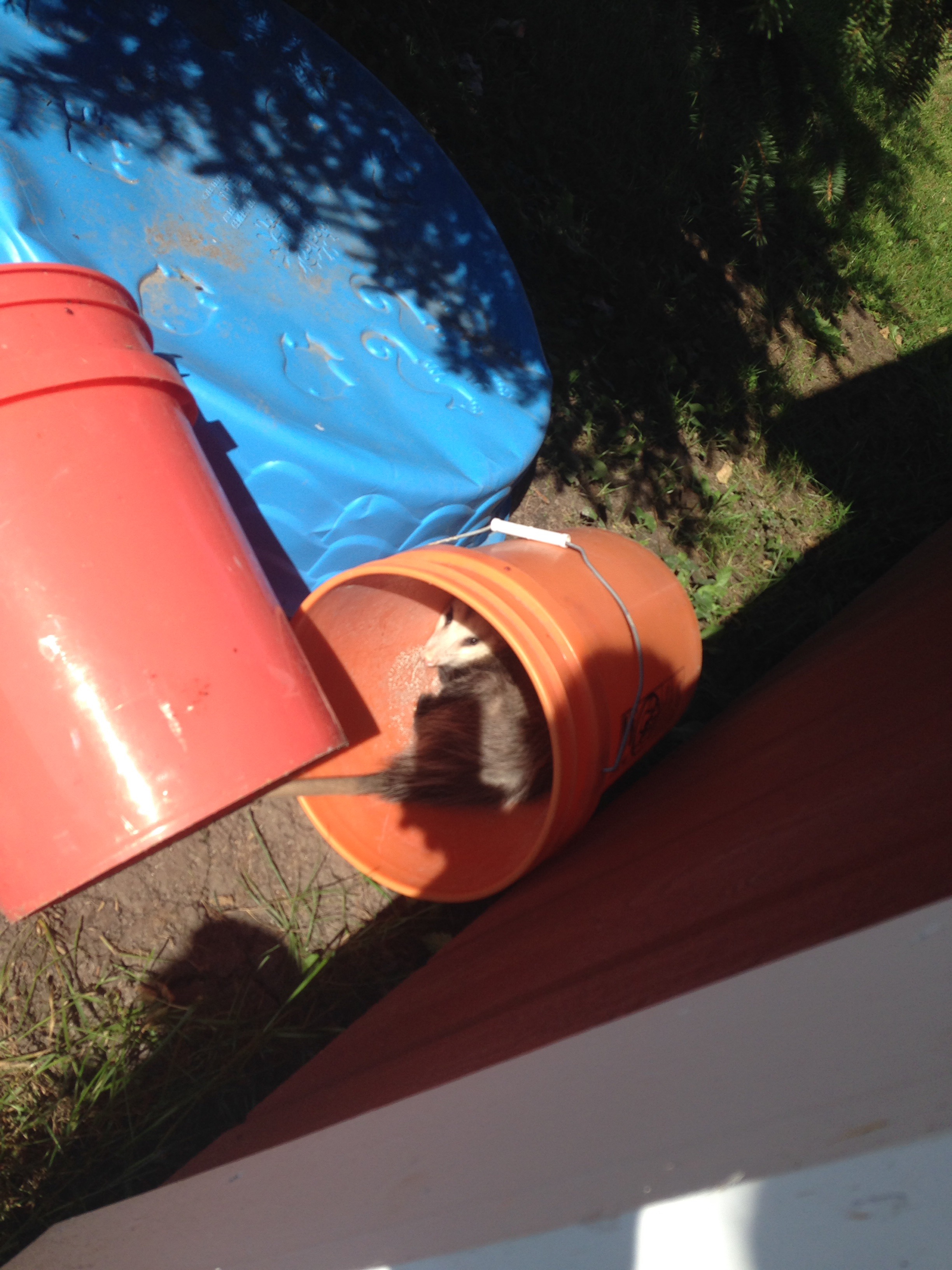
I am quick with my chicken chores now, especially on days when I don’t have to refill the waterers.  As I ventured behind the coop to get one of the compost buckets, I was startled to find a possum  curled up in the leftover pine shavings in a nearly empty pail.

 Never before have I seen a possum in close proximity.  Its narrow, black and shiny eyes were open.  I could see sharp, foreboding teeth as it curled back its lips to hiss at me.  I shuddered.

I didn’t have to say anything. That possum knew it had me wrapped tightly in fear.  My chickens suddenly seemed so vulnerable.  Wendell could crow, but would his flock be safe from this angry possum?

Will you ever really, truly feel safe with me?

I could think of ways to trick the possum and to make him go away.  I could turn the bucket upside down to trap him.  I took a little extra time with the chicken chores, and as I picked up chicken poop and tossed some herbs into the nest boxes,  I wondered if anyone had ever given thought to the well being of the possum, and if anyone loved him best.  

At dusk, I counted nine hens and Wendell, perched safely in their spots on the roost.  The possum was gone from the bucket, and I checked the corners of the coop just to be sure he wasn’t hiding behind a feed container.  Until the morning, at least, my chickens are locked up tightly.  

I couldn’t think of anything else to say, which is good, because you couldn’t listen anymore anyway.  The burdens of what brought you here have filled you up, at least for now.  

We won’t be needing any words, just a safe place to land when we are weary.  And we are.

Then the sun rises, the rooster crows, the aroma of the morning’s coffee mixes with the lively conversation, and we are here to listen, to hear every word.

Fore!


I thought that maybe if he could hear the urgency in my voice, it would somehow snap him into submission.  I hoped that he might carry out at least a tiny detail of his morning routine.  I should know better by now.  But there is always hope; there must be.

The eventuality of the last game of the regular baseball season stirs me at a primal level, to some sort of overwhelming sadness, knowing that I need to withstand another blustery Chicago winter and defend my family through another flu season before my heroes take the field again.

Two times in the last three days, glass has been shattered, with intent, in a raging fit of misdirected anger.  Shattered, too, was my hope that maybe, just maybe the nineteenth and twentieth medications prescribed to a boy who is not quite nine, might be having a positive effect.

“I know, you idiot.  I know I broke the glass.  Now, shut up.  Stop talking about it, you jerk.”  If only we could make it go away.  The glass is not all that is broken.

He refrained from swinging at me again. In this moment, his fight was gone.

Last fall, I worked on cleaning out the old corn crib on our property.  It appears to have been used as an intend-to-burn pile and random garbage depository over the years. To me, this task held nearly the same mystery as an archaeological dig.  As I pulled wild rhubarb and invasive grasses that were growing through four-inch cracks in the cement floor, I marveled at the accumulated “treasures” which revealed themselves to me.  There were remnants of a rug, glass vials, an old mop head,  a crystal drawer handle, bullet shells, broken shards of beer bottles and mirrors, a box spring, and many other rusted, smashed, and otherwise indeterminate remnants that were most certainly an important part of something at one point in time.  It would be a stretch to repurpose any of these things, and most had been charred by the fires which mustn’t have been able to keep up with the demand.  Still, it was gratifying to envision what someday might be, what the future might hold for this old corn crib, as I filled dustpan after wheelbarrow.  I thought, too, as I picked up the bits of broken bottles, about the glass that had been shattered, without warning, at the hands of my small son.

Near the very top of the structure was, curiously, a golf club.  Lodged in the iron rails and clearly uncomfortably displaced from its best game, I imagine it must have landed there at the antics of the children who visited this farm long ago or perhaps the frustrated golfer who had lost his last golf ball somewhere in the overgrown acreage.  It was to remain through our first winter here, if only because I had no idea how to get it down.  I had all but forgotten about that golf club.

Winter drifted in, and then the spring, and soon came the chickens and other homestead projects and feats of unruly children which seemed to beckon themselves with greater urgency than the weeds in the corn crib.

What if we had been warned in advance that twenty medications would be ineffective?  What if I had known that the tiny, helpless  two-day-old boy that I held tightly at the DCFS office would nearly physically overpower me at a young age, and that my arms and legs would be decorated with bites and bruises, the battle wounds of trying to keep my child from harming others.  Would a warning of what was to come have made the outcome any different?

If I knew what was going to happen, would it still happen?

If I had known that the wild rhubarb and grasses would invade the corn crib once again, would I have worked at it the first time?

Aaron came from inside the house,  slamming the back door and bantering about how something wasn’t fair.  I callled for him to join me in the corn crib, for I could use some help digging out these weeds which, as fall is once more upon us, have again interrupted my peaceful vision.  He was nearly halfway up the inside of the structure by the time I realized what he was doing.  Turning his head in my direction and flashing his baby-toothed grin, he knew I wasn’t about to stop him.  He was going to get that golf club.

I had to look away.  The thought of this tiny boy colliding with the jagged cement foundation was too much to bear.  Had I known, I would have at least had time to pad the surface with something soft.

I wonder why the tears still came on the last day of the baseball season.   The Cubs had won the division, and there was to be more, at least a few games if not a trip to the World Series, of the game that I so loved.  Maybe I don’t know any better.  I wonder if the Cubs will win the World Series.  I wonder if I knew that answer now, whether the journey would still hold the same magic.  What I do not wonder, though, is whether I will love the team, and the game, next year and all those following, no matter what happens this October.

Aaron was not angry anymore.  He left the corn crib with a new skip in his step, absolutely beaming, and holding his prized possession: a Betty Jameson driver that represents determination, strength, and triumph to a little boy who is often overshadowed by things bigger than he is.

I’m glad he was brave enough to believe in himself.  I believe in him, and in all of my kids.  One day, I will take Ethan to a baseball game, and he won’t have to worry about the crowds, the bees, the smell of the food, or getting hit by a foul ball.  Hopefully, the Cubs will be on their  way to yet another championship.  One day, he will know what it is like not to have to worry, to not have swirling thoughts that constantly entangle him and will not go away.  He can leave that to me.  Things will be different for him, one day.  I just don’t think I want to know what will happen between now and then: how many times I will need to pry the wild rhubarb from the cracks in the corn crib floor; how many times our days will, like the glass, be shattered.  I don’t want to know, because the magic and triumph of that day will bring glory that can come only through the experience, through the bruises, the fears, and the disbelief.  And I cannot look away from that.

His Nike high top met my cheek with such a force that my glasses flew from my face.   There we were in the new doctor’s office, and my boy did not want to get on the scale.  This time, there was no shattered glass.   I hadn’t seen it coming, and it would have been nice to have a warning.  He could have at least called, “fore!”  What if I had known?  What if I had turned away?  How could I?

Through what is broken, through what stirs your soul, through what brings your greatest joys, even through twenty more medication trials, there will always be another day, holding mystery all it’s own.

Standing By

Somehow, I felt better sending the little chicken with Sam.  He’s gone for three months, half a day away by airplane.  He must be having the time of his life, and I will be here, home, where he no longer even lives, waiting for him.  

When Elliott was small, he spent a magical year at a Waldorf kindergarten.  I, at least, found the rhythms and traditions of Waldorf education to be magical.  He, perhaps, would have been just as happy to swing from the monkey bars and practice developmental spelling at the community school, but that wasn’t to be; not that year.    Instead, he kneaded bread, learned to finger knit, sang pentatonic chants by candlelight, and built homes for woolen gnomes with tree bark.  Alongside other parents who joined the handwork group, I spent the school mornings knitting little wool farm animals and angora bunnies, and sewing a sizable collection of Waldorf-inspired baby dolls, fairies, and elves.    All the while, two-year-old Sam was by my side.  The knitted chicken, the one now traveling to Europe some twenty years later with Sam, was one of these handwork creations.  I guess it makes me feel better to know that my boy isn’t all alone. 
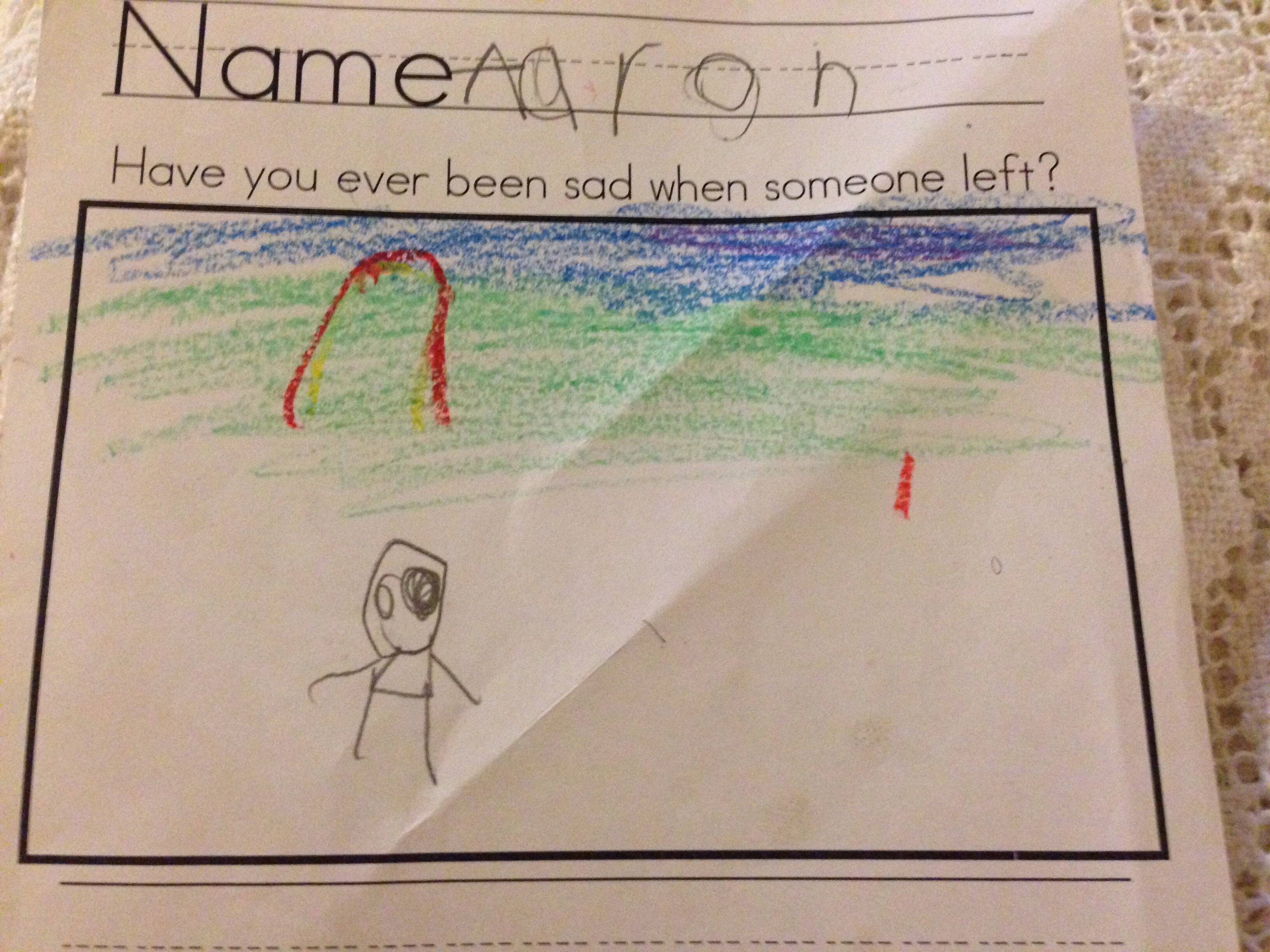
Lately, when Aaron gets sad, he tells me that he misses Happy, our baby chick that never made it out of the brooder.    I think what he misses is beyond the lost two-day-old chicken.  Aaron was two days old when he came to us, the truest of blessings in the midst of unthinkable grief and suffering.  I know there are more questions than answers.  There always will be.

Earlier this week, I was sorting through papers from the last school year.  To me, this is a daunting task, but a necessary one as the buses have come to collect and as I can no longer fit any more papers into the wire files which contain evidence of a year of childhood spent.  

The little figure in Aaron’s drawing was smiling, standing under a rainbow.  This was his answer to the question posed to his kindergarten class: “Have you ever been sad when someone left?”  He must know, as only a child on earth might, that there is something higher in the desperate sadness, and that he can, if he looks hard enough, see what he needs to see inside the rainbow.  

Our hens are giving us about half a dozen eggs every day now.  They have learned to lay in the nest boxes, and we are delighted with our daily harvest.   Though I knew they could begin to lay eggs at about sixteen weeks, those first two eggs caught us by sudden surprise.  During those early days,  an occasional egg would be discovered under the roost, likely laid by an unsuspecting young hen who was, too, surprised.  

One morning, I opened the door to the coop for my cleanup chores to find one of the hens in a nest box.  She looked quite uncomfortable and restless as the entire flock looked on, mouths gaping in anticipation of what was to come (or perhaps because they were hot, but I don’t like to think so).  They were either staring at her in her state, or they were cheering her on, offering comfort in the form of their company.  

Maybe there’s no difference.  

We have just returned from a camp where each family has a child with autism.  For those four days, for that brief window in time, I know the looks were those of understanding.

There’s definitely a difference.

So when you are far away, and when I cannot be at your side,  I will stand by, knowing that as I am missing you, you are carving your own path, knitting your own chickens,  and seeing inside the rainbows.

Aaron often draws me in his pictures, and I am usually standing alongside him.  Of course, we look quite similar with our big circle eyes, our cheek-to-cheek smiles, and our line-drawn legs.  We appear many different colors: sometimes purple, green, or pink.  Carefully formed letters, textured with generous strokes of crayon, proclaim, “I like me mom.”  I like you, too, son…more than you can imagine.  

I’ll be here, if you need me. That’s where I will find my sense of purpose: where you are, or at least where you once were.   And may your days be filled with music, rainbows, great surprises…and, of course, chickens.

Shining like Nobody’s Business: Reflections on Turning Fifty


“I can tell you’re old, because I see all those veins on your head.”  Ethan sat across from me at the picnic table in the shelter at Annie’s Woods, the park where we spent some time together on the late July evening that marked my fiftieth birthday.  He did not offer time for my reaction to his comment as he quickly abandoned his half-eaten Whopper in favor of exploring the playground equipment.

Aaron, not to be outdone by his brother, looked up at me and offered this: “I will still think about you when you are dead.”

That’s good to know.  In my mind though, I am really not that old.  I may be old enough to be the mother of the mothers of my small son’s friends, but I am pretty sure that I still have about half of my living left to do.  I am pretty sure that I am still the same kid that so loved sitting under the trees and picking grass.  Now, though, I just know more…or less, depending on how you see it.

I may be halfway done, but I’m still in here; it’s still me inside.

During my working years I was assigned to see a young mom whose baby had been born with a cleft lip.  The family was working with a team of medical professionals at what was to be the beginning of a long road of services and medical procedures.   This girl, probably all of about twenty years at the time, looked at me with eyes that sparkled like the richest crystals and expressed from the deepest place in her soul that when she first saw her son, what she saw was beauty beyond words.  Her baby was more than the issues that he would have or the surgeries that he would need.  I held back my tears as I wondered how I could possibly offer anything to someone that quite clearly already knew what this life was about.

I remember that anticipation…when the tiny life within was to be my whole world.  My friend Bernadette, herself just a couple years from motherhood at the time, and I spent long hours folding and admiring the tiny Halloween themed sleepers and baseball suits that awaited newborn Elliott. Now, he’s grown and long since gone, working at carving a future for himself.  As the brothers move on to explore what their next days offer,  I stand in the wake of their memories, hoping that they think of me, even before I am dead.  Until these days,  I hadn’t given a thought to how my own mom may have felt when I had spent my last summer at home, when I had spilled nail polish on the carpet, accidentally left the water running, or ate the only remaining chocolate cupcake for the last time.
When our family stopped in Alabama last year on our spring break vacation to visit my parents, my dear friend Rose gave me a carton bearing a dozen glorious eggs…robust and not of colors ever to grace the grocery shelves…laid by her hens.  Some of our chickens have started laying, and they are learning to find the nest boxes.  We have had a few “experimental” eggs, some speckled, and some that have not been so pretty, but they are perfect just the same, as they came from our beloved chickens.

As a little girl, I loved being outside.  I still do.  Now, though, I pick weeds.  It’s functional, and I do not like to have idle hands.  I can tell how easily the weeds will come up by how they look, but I don’t know their names.  I could chop them close to the surface, which would be much quicker than pulling them all up by hand.  It would look nice for a few days, but underneath the roots would still be strong, even manipulative, and in the middle of the next garden party, the old thorns might come back to make me bleed.  This time, though, they are stronger and probably more resistant.  Maybe that is what happens as we grow older.

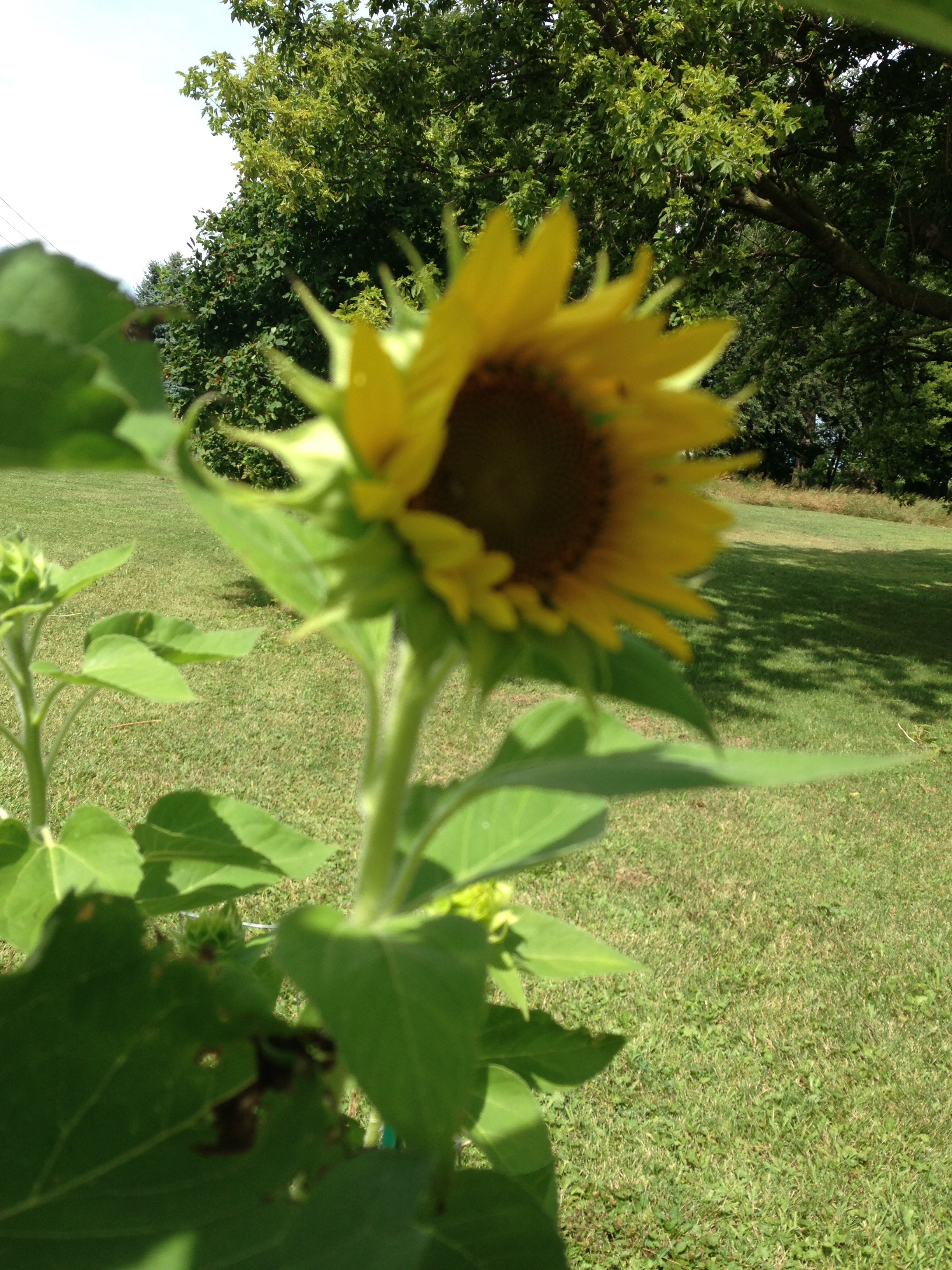
Last week, I found myself waiting in line for an estate sale.  It was hot, and I didn’t expect to be standing outside.  I looked up at the window framing the front porch where intricate leaded glass strained as a sunflower peering toward the sun to show itself beneath the knotty pine panelling.   It made me wonder what other things of beauty had been boarded over, and not just at this house.  As I picked my number, I surmised that it must have been decades since I had waited this long for a sale.  Perhaps it had been the time when we bought our old piano.  Dan had been eager to go to this particular sale, which is not usually the case.  I didn’t know that he had, though, seen the ad for the estate sale: the ad that noted for sale a 1952 Starck spinet.  We bought our piano that day, with six-month-old Elliott in tow.    The man running the sale told me that I should put a bit of lemon oil on it so it would “shine like nobody’s business.”  It was perfect and beautiful, and it served its purpose well for a long time.  Some years ago, it cracked through the motherboard.  Still they played, they sang, and they filled our home.  My mom inherited a piano, and then my parents moved away and could not take it with them.  The inherited piano, blond wood and in perfect tune, came to replace our beloved piano, the one where baby Elliott had played his first notes atop my young husband’s lap; the one that could no longer hold a tune but for the decades of memories captured within; the one that we had loved desperately but that no longer met standards of the real musicians.  When we moved to the farm, we left the “replacement” piano at our house in town, just “temporarily,” I say.  I miss having a piano, previously worn, blond, or otherwise.   I had great aspirations of learning to play as a college student.  I found a teacher who offered lessons in the loft of the building directly across from what was my apartment at the time.  My piano career ended pretty quickly, though, after my instructor’s poignant question.

“So you have a piano, right, because you are going to have to practice your lesson?”

Oh, a piano.  I didn’t have a piano. I needed a piano.  We need a piano.

Over half our lifetimes ago on a crisp September day, we were at Oakbrook Mall when Dan asked me to grow old with him.  The diamond sparkled like my friend’s eyes when she spoke of her son.  In that moment, life’s richest blessings were right in front of me, and I was eager to start work at gathering them.

And I wonder, if you could go back, would you?  Would you spend your days over and again, knowing what you know?  Through the trials and the deep love, would you stand before our Maker, and would you play the piano and dig up the weeds?  I don’t know how I could not.
I guess I thought the age spots might be more dignified, but it seems they have come in the form of bites, bruises, the extra ten or fifteen pounds, and the anxiety that comes from years of night waking and being on edge.

I wouldn’t, though, change the wisdom imparted from the words of a young mom, or the opportunity to hold my child to keep him from harm, or the chance to hear my husband play a song for our children, or the daily chore of gathering fresh eggs, however misshapen.

And I think it’s time to bring the piano to the farm.  It’s not the old Starck that we so loved, but it’s still going to make beautiful music.

Is this your new site? Log in to activate admin features and dismiss this message
Log In